



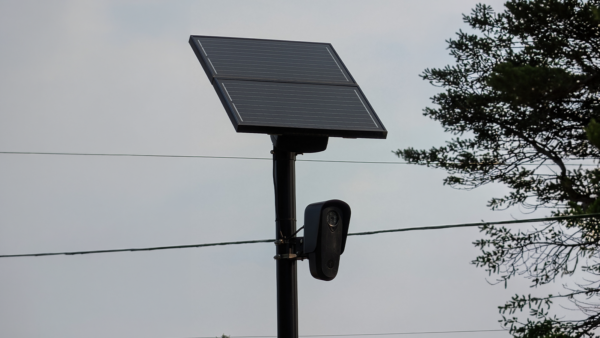
ERIE — Senator Dan Laughlin (R-49) announced plans to introduce legislation prohibiting the use of Flock Safety (surveillance) cameras and substantially similar networked automated license plate reader (ALPR) systems in Pennsylvania.
Laughlin said the proposal follows growing concerns from constituents about the rapid expansion of these cameras and the potential for the technology to become a system of mass surveillance.
“Some of these systems do much more than record what happens in a public place,” Laughlin said. “They automatically identify vehicles, catalog their movements and enter that information into a searchable network. That makes it possible to track and reconstruct where a person has traveled over time, even when that person has done nothing wrong.”
ALPR systems are often promoted as tools to locate stolen vehicles and assist with criminal investigations. However, some systems also automatically capture, catalog and retain information about where vehicles travel. The overwhelming majority of individuals captured by these systems are not suspected of any crime.
Laughlin pointed to the COVID-19 era as a warning about how such a network could be used during a future emergency. During the pandemic, government officials imposed lockdowns, travel restrictions and quarantine requirements that limited where people could go and what they could do.
“If a network like this had been operating on a wide scale during the COVID lockdowns, it could have been used to identify Pennsylvania vehicles leaving the state, track where they traveled and record when they returned,” Laughlin said. “Regardless of how someone felt about those restrictions, we should all recognize the danger of creating a system with that capability. Once the surveillance network is built, there is no guarantee it will only be used in ways we find acceptable today.”
Information collected by these systems could reveal where someone works, worships, receives medical care, spends personal time and who they associate with.
“That is a level of surveillance that should concern everyone,” Laughlin said. “Law-abiding citizens should be able to travel throughout Pennsylvania without having their movements continuously collected and entered into a searchable database.”
The legislation would not prohibit ordinary security cameras or ALPR systems that record video without automatically identifying and cataloging vehicles, license plates or individuals. It also would continue to allow law enforcement officers to use vehicle-mounted license plate readers as part of their duties.
“Public safety is a responsibility we all take seriously, but it should not require building a surveillance network capable of tracking the daily movements of millions of innocent individuals,” Laughlin said. “There is a clear difference between an officer using a license plate reader during police work and a permanent network collecting information about everyone who passes by.”
CONTACT: Chris Carroll, 814-453-2515