|
||
|
In this Update:
Aimee’s Law Moves Forward
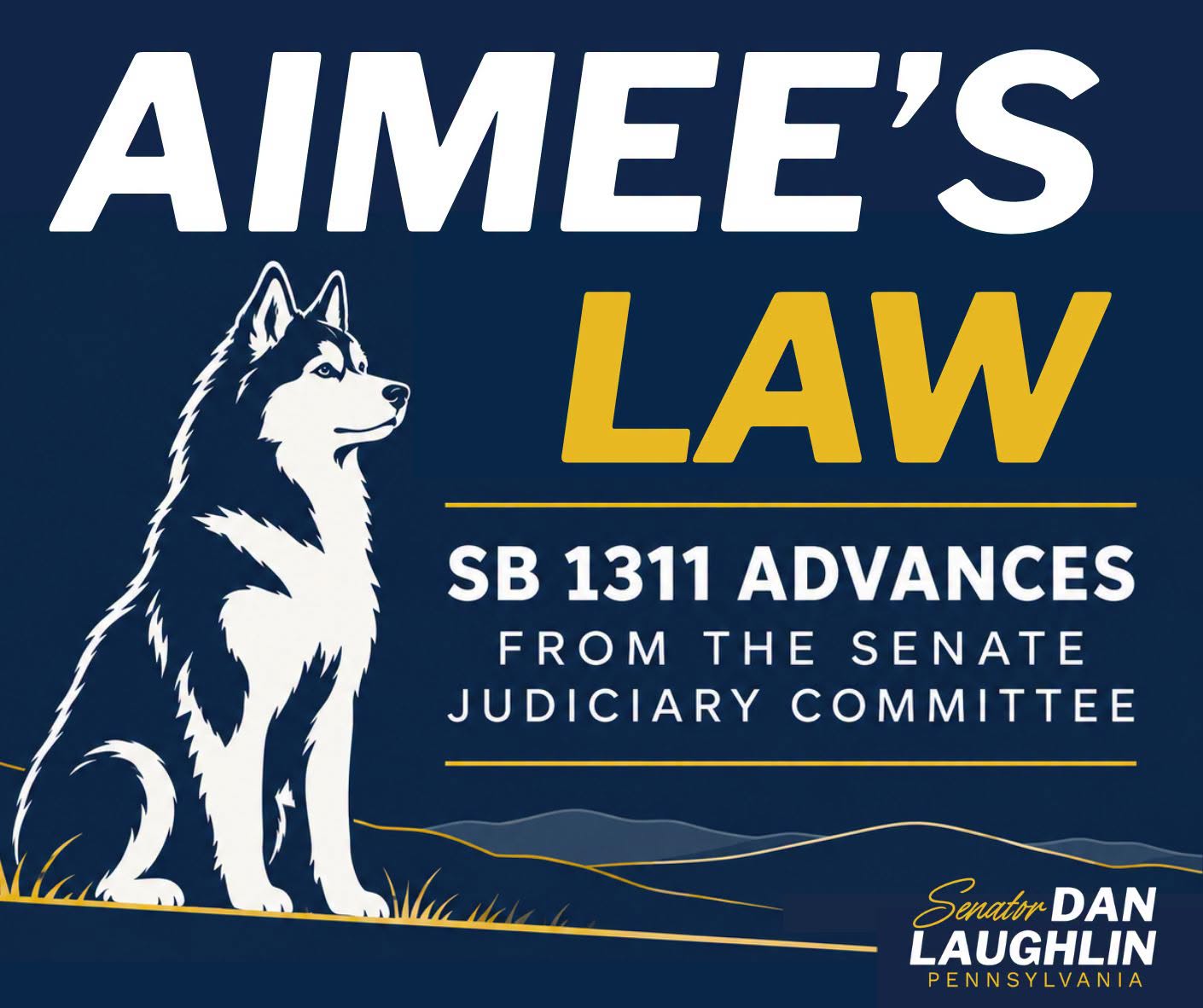
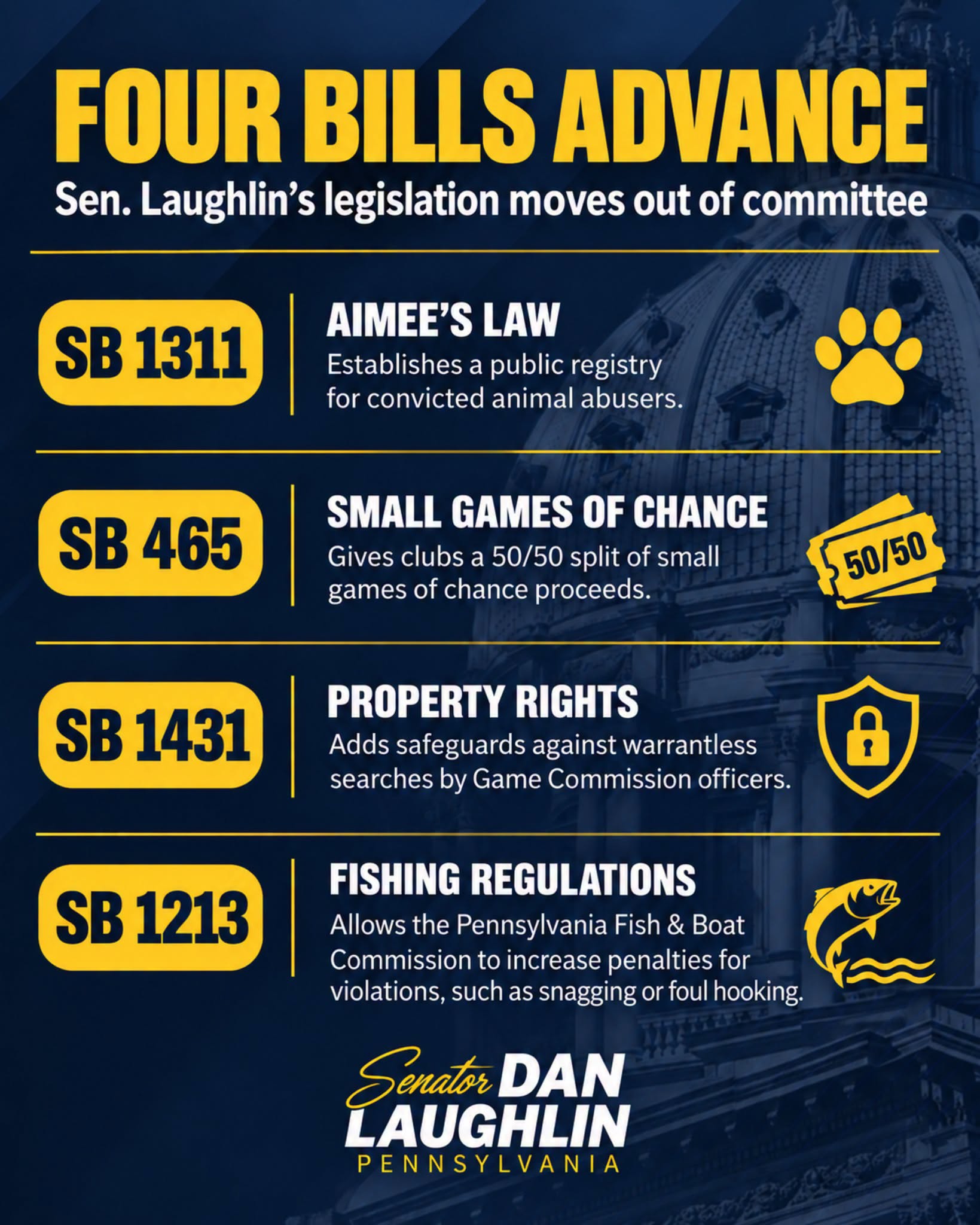
My bill, Senate Bill 1311, advanced from the Senate Judiciary Committee this week, bringing Aimee’s Law one step closer to passage. Named for a six-month-old husky who died after being abandoned in the cold in Erie, the bill would establish a statewide animal abuse registry to help protect animals from convicted abusers. I’m grateful to my colleagues for their support and will continue working to move this bill forward. Four Bills Advance in Harrisburg
It was a busy and productive week in Harrisburg as four of my bills cleared committee:
Thank you to my colleagues for supporting these measures. I’ll continue working to move them forward for Erie County and communities across Pennsylvania. Investing in Erie’s Public Safety and Streets
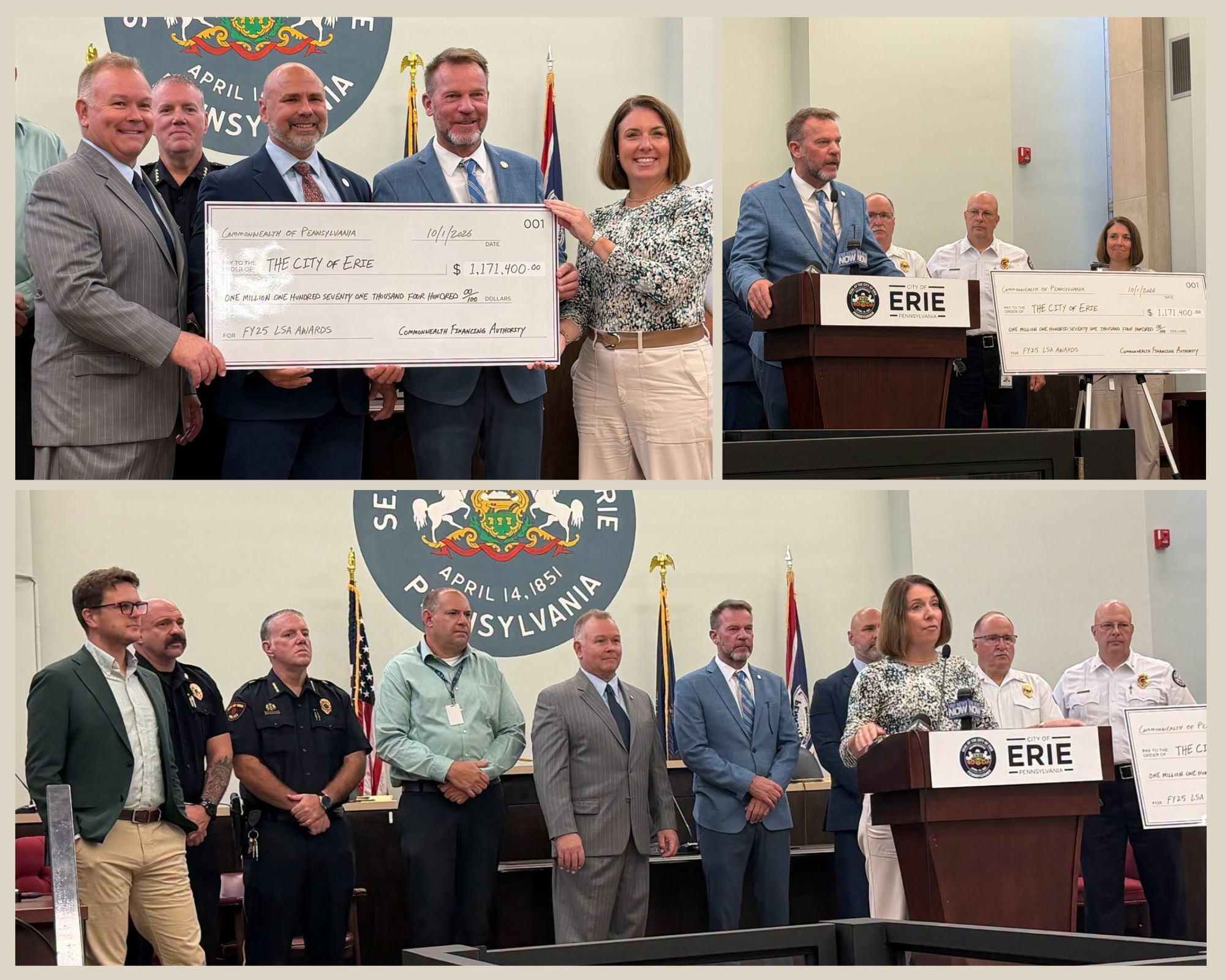
I joined city officials to highlight more than $1.17 million in Local Share Account (LSA) funding for Erie. These investments will support roof replacements at Engine 11 and Engine 13, community policing vehicles and a new public works milling machine. I was proud to support these projects, which give our first responders and public works crews the facilities and equipment they need to serve our community. How I Can Help
If you or someone you know is having trouble accessing state programs or services, or if you have questions about a law or government program and aren’t sure where to turn, my team and I are here to help. We can guide you through the process, connect you with the right resources, and provide support on a wide range of issues to make things easier for you. Department of Health Withdraws Overbearing Health Regulations After Public Outcry
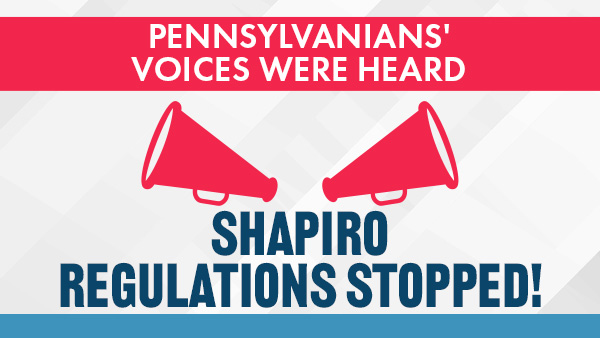
Gov. Josh Shapiro’s Department of Health (DOH) withdrew proposed health regulations that would have vastly expanded state government’s power over the lives of Pennsylvanians, a tremendous victory for the grassroots efforts of commonwealth citizens. Shortly before the regulations were withdrawn, more than 10,000 citizens, school officials and others submitted comments to the Independent Regulatory Review Commission expressing their serious concerns. I joined my colleagues in a letter to the commission warning the changes would infringe on our constitutional rights. The proposed regulations would have given the state more power to enter homes and businesses without a warrant, speak to students without parents present, access private health records, unilaterally impose mask mandates and more. The DOH introduced the massive, 502-page regulatory overhaul without input from the public or the General Assembly. Although these regulations were withdrawn, we must remain vigilant – the governor’s DOH could resubmit them at any time. Senate Passes Measures to Boost Protection of Senior Citizens
The state Department of Aging has been under review by the Pennsylvania auditor general and inspector general over concerns for the well-being of seniors being taken care of by Pennsylvania’s 52 county-based Area Agencies on Aging (AAA). The Senate approved legislation that would build on the release of Auditor General Tim DeFoor’s recent audit and implement proper safeguards for older Pennsylvanians. Senate Bill 1376 would:
The Senate also passed legislation to update Pennsylvania’s Older Adult Protective Services Act to better protect seniors from financial abuse and scams. The FBI ranked Pennsylvania ninth in total losses to fraud experienced by older adults in 2025. More than 7,000 seniors were defrauded of more than $200 million, representing a 43% jump from 2024. Senate Bill 738 would require financial institutions to report suspected cases of elder financial abuse and empower the institutions to hold suspicious financial transactions. The institution would have to report this transaction to the appropriate AAA. Similar legislation has been passed in more than 20 states and has been used as an effective tool to prevent fraud. Read more about Senate Bill 738 here. Legislation to Ban “Nudification” Apps Passed by Senate
Continuing our work to implement stronger safeguards on artificial intelligence, legislation to ban “nudification” apps – which allow individuals to take an image of someone and generate a fake nude or sexually explicit photo of that person – was approved by the Senate. Senate Bill 1368 prohibits such apps from being developed, operated or made available in Pennsylvania, including through online application marketplaces. These apps serve no legitimate purpose and pose a special risk to children and school students, whose lives can be upended and reputations damaged through the malicious use of this technology. The measure will be sent to the House of Representatives for consideration. Learn more about Senate Bill 1368 here. Strategies to Combat Antisemitism and Hate Highlighted at Senate Hearing
Educators, parents and advocacy organizations shared their experiences with antisemitism and explored strategies to combat hate during a public hearing of the Senate Majority Policy Committee. According to the Anti-Defamation League’s (ADL) 2025 Audit of Antisemitic Incidents, Pennsylvania recorded 281 antisemitic incidents, the fifth highest number in the nation. Harassment accounted for 70% of these cases — 194 incidents — alongside 80 acts of vandalism and seven physical assaults. It’s believed these incidents are grossly underreported because victims fear for their safety. Testifiers discussed how antisemitism can take root in schools, noting the state Department of Education doesn’t track or require administrators to note when an incident is antisemitic, leaving students and parents without a way to seek justice. Video of the full hearing and written testimony are available on the Senate Majority Policy Committee’s website. Blind or Deaf Higher Education Beneficiary Grants Available
Pennsylvania students who are blind, deaf or have a visual or hearing impairment may qualify for up to $500 in scholarships through the Pennsylvania Higher Education Assistance Agency (PHEAA). Applicants must supply written documentation to PHEAA showing they have been evaluated and are eligible to receive benefits and supply a completed Medical Professional Certification form regarding a visual or hearing impairment. Interested students must also complete the Blind or Deaf Higher Education Beneficiary Grant Application. The completed 2026-27 application and additional documentation must be submitted by March 31, 2027. Breast Cancer Awareness Month: Don’t Miss Your Mammogram!
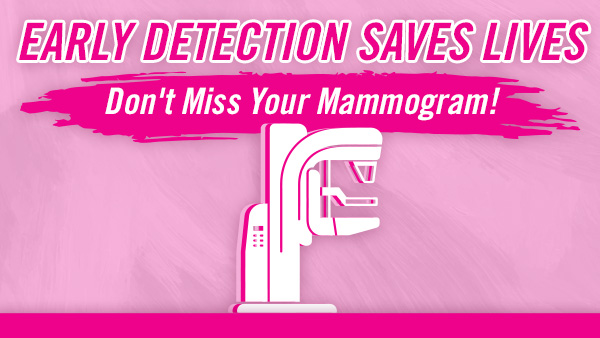
The American Cancer Society recommends that women at average risk begin annual screening mammograms at age 40. If you have a family history of breast cancer or other risk factors, talk with your healthcare provider about whether earlier or additional screening may be appropriate. To help, we passed Act 1 of 2023 to ensure supplemental breast cancer screening MRIs and ultrasound for individuals at higher risk are covered with no out-of-pocket costs. We also passed Act 52 of 2025 to eliminate all out-of-pocket costs for diagnostic breast imaging, including mammograms, MRIs and ultrasounds needed to evaluate an abnormal finding. Act 52 is currently beginning the implementation process, with full implementation by January 2028. Pennsylvania residents without insurance or limited insurance, like a high-deductible plan, may qualify for no-cost mammograms and follow-up imaging through programs such as the Pennsylvania Department of Health’s Breast and Cervical Cancer Early Detection Program. To learn more, contact the PA Breast Cancer Coalition’s Director of Patient Advocacy Dolores Magro at 800-377-8828. When breast cancer is detected at its earliest stages, the 5-year survival rate is 99%. Don’t miss your mammogram. Early detection saves lives! |
||
|
||


Want to change how you receive these emails? 2026 © Senate of Pennsylvania | https://www.senatorlaughlin.com | Privacy Policy |